
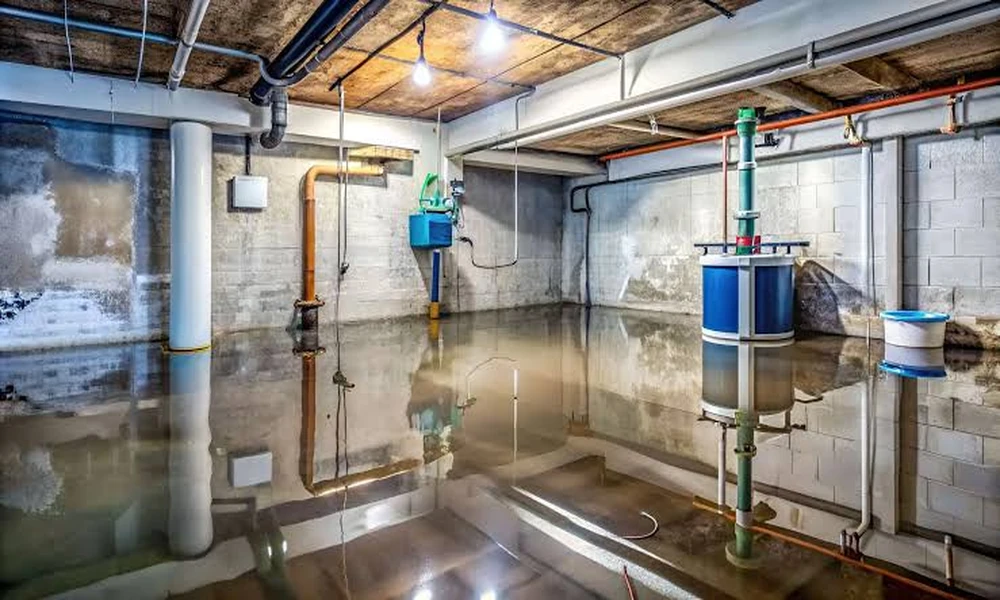
Much of Saint Paul was built long before anyone thought of a basement as living space. Thousands of homes in neighborhoods like Frogtown, Macalester-Groveland and the East Side sit on foundations of stacked limestone or hollow concrete block, laid into heavy clay soil that holds water like a bowl. Add a long winter, a fast spring thaw and summer storms that can drop an inch of rain in an hour, and the lowest level of the house ends up taking the hardest hits year after year.
Help with basement flooding in St Paul often arrives the same day from a Roseville company that has been drying out Twin Cities homes since 2009. One family wrote about calling the crew twice for flooded basements and seeing a team at the door within hours both times. The company runs emergency lines around the clock and handles water, fire and mold losses, staying on through the rebuild once the drying is done.
Every wet basement has an entry point, and knowing which one you’re dealing with changes both the cleanup and the fix. Water reaches a basement in four main ways, and each leaves its own fingerprints.
Up Through the Floor Drain
The most unpleasant route starts in the pipe that’s supposed to carry water away. When the sewer line between your house and the street clogs or collapses, wastewater from your own sinks, toilets and laundry has nowhere to go except the lowest opening in the system. That’s usually the floor drain near the water heater.
Older Saint Paul homes commonly have clay tile service lines, and clay joints are an open invitation to the roots of boulevard elms, maples and lindens. Roots slip in through hairline gaps, swell over the years and catch grease and wipes until the line chokes. Settling clay soil can also sag or crack a section of pipe, creating a low spot where solids collect.
Many owners are surprised to learn who owns that pipe. According to the City of Saint Paul’s sewer utility, property owners are responsible for maintaining and repairing their private sewer service all the way from the house to where it meets the city main. A camera inspection is the only reliable way to see what’s happening inside it, and a backwater valve installed by a licensed contractor can keep a future clog from pushing sewage back into the basement.
Water coming up through a floor drain should always be treated as contaminated. Carpet, pad and the lower couple of feet of drywall that it touches generally need to come out rather than be dried in place.
Sideways Through the Walls
Groundwater is patient. When the clay around a foundation fills with snowmelt or a week of rain, it pushes against the walls with real force, and water moves through whatever paths it can find. In limestone foundations those paths are the mortar joints, which soften and crumble after a century of freeze and thaw. In block walls water fills the hollow cores and weeps out at the bottom course or through the cove joint where wall meets floor.
Seepage tends to announce itself slowly before it ever creates a puddle. Watch for these signs.
- White, chalky efflorescence on block or stone, left behind as mineral-laden water evaporates
- Damp, darkened mortar lines after storms that dry out again in a day or two
- A narrow wet strip along the edge of the slab
- Peeling paint or bubbling waterproof coating on the lower wall
- A musty smell that gets worse in late spring and summer
Interior drain tile with a sump pump is the usual long-term answer for chronic seepage. Patching mortar and painting the wall with a sealer can slow minor dampness, but they won’t hold back serious hydrostatic pressure.
Down From the Yard
A surprising share of basement water starts on the surface just a few feet from the house. Downspouts that dump next to the foundation concentrate an entire roof’s runoff into one small patch of soil. A lot of older lots have also settled over the decades, so the ground now slopes toward the house instead of away from it.
Window wells are the classic weak spot. A well without a cover fills with leaves, snow and rain, and once the water rises above the sill it pours straight through the window frame. In March, when the ground is still frozen a few inches down, snowmelt can’t soak in at all and runs along the surface until it finds the lowest opening, which is often a basement window or a crack where the front steps meet the foundation.
Fixing this route is usually the cheapest of the four. Extending downspouts several feet out, rebuilding grade so it falls away from the walls and adding clear covers to window wells solve more wet basements than most homeowners expect.
From Inside the House Itself
Not every flood comes from outside. Some of the biggest messages crews see begin with equipment sitting in the basement.
Water heaters tend to fail around the ten to fifteen year mark, often by rusting through at the bottom of the tank. Washing machine supply hoses made of rubber can split without warning and release hundreds of gallons before anyone notices. Pipes running along the rim joist or through an unheated porch can freeze during a January cold snap and burst, then leak only after the thaw. And a sump pump that dies during a thunderstorm power outage turns the system meant to protect the basement into the source of the flood.
Most of these failures give small warnings first, such as a rusty ring under the water heater, a hose that looks cracked or a pump that runs constantly. A battery backup on the sump, braided steel washer hoses and pipe insulation along exterior walls are inexpensive ways to take this route off the table.
What Happens Once the Water Is In
Whatever the entry point, time works against you after water reaches the floor. Mold can begin growing on wet drywall, carpet and wood within a day or two, and the cool, still air of a basement slows natural drying. Professional crews extract standing water, pull out materials that can’t be saved, then set air movers and dehumidifiers while tracking moisture levels until the framing and slab read dry.
Insurance is where the four routes matter most. Standard homeowners policies typically cover sudden failures like a burst pipe or a ruptured water heater, but many exclude sewer backup and sump overflow unless an endorsement was added. Groundwater seepage and surface flooding are usually excluded entirely, with true floodwater covered only by separate flood insurance. Photographing the scene, noting where the water came in and calling your agent early helps sort out which situation you’re in.
The best basement in an old house isn’t one that never sees moisture. It’s one where the owner knows which of these four paths the water is most likely to take and has closed off as many of them as possible before the next spring thaw.

Comments are closed.