
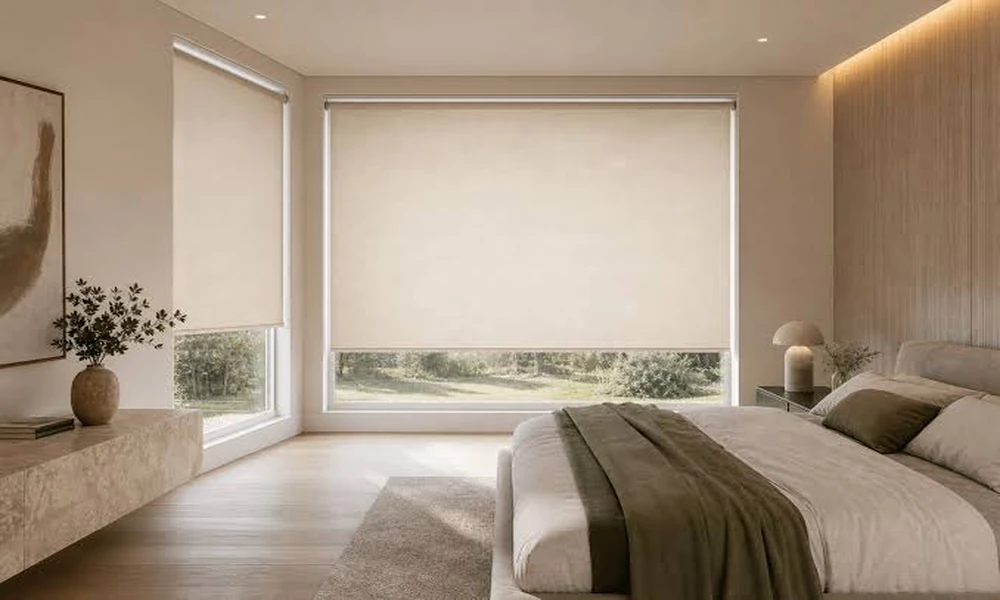
Most homeowners treat window coverings as a one-time decision made during renovation and rarely revisit it, which is why so many living rooms end up with a blind chosen for the showroom sample rather than how the room is actually used through the day. Roller blinds reward a bit more thought upfront, since fabric choice and mounting style affect daily use far more than the simple mechanism suggests at first glance.
Why Roller Blinds Suit Modern Interiors
The flat, minimal profile of a roller blind sits close to the window frame without the bulk of layered curtains, which suits the clean lines common in contemporary Singapore homes. This slim footprint also makes them a practical choice for smaller rooms, where a bulkier treatment would visually crowd the window and make the space feel more confined than it actually is. Open-concept layouts, common in newer condominium developments, also benefit from this simplicity, since a bulky treatment on one window can visually interrupt sightlines across an otherwise open floor plan.
Fabric Types and What They’re Suited For
Light-filtering fabrics soften harsh sun while still allowing daylight through, suiting living areas where natural light matters during the day. Blackout fabrics block light almost entirely, making them the more practical choice for bedrooms or media rooms. Sunscreen fabrics sit between the two, cutting glare and UV exposure while preserving an outward view, which suits rooms where maintaining a connection to outside matters more than full privacy. Home offices increasingly favour sunscreen fabric specifically, since it reduces screen glare during video calls without requiring the room to be darkened completely.
Choosing Between Manual and Motorised Operation
Manual chain or spring mechanisms remain reliable and cost less upfront, suiting most single-window installations without any real downside. Motorised automated window covering system options suit hard-to-reach windows, households wanting scheduled operation, or homes already integrating smart home controls, though the added convenience comes with a higher upfront cost and a battery or wiring consideration to plan for.
Measuring for a Precise Fit
Roller blinds can be fitted inside the window recess for a neat, flush look or mounted outside the frame to fully block light at the edges. Recess-fit installations need precise measurements, since even a few millimetres of error can leave the blind catching on the frame or leaving unwanted gaps. Outside-mount installations are more forgiving of small measuring errors but require enough flat wall space above the window for the bracket. Taking three separate width measurements, top, middle and bottom of the recess, catches the slight frame irregularities common in older buildings that a single measurement would miss.
Light Gaps and How to Minimise Them
A standard roller blind leaves small light gaps along the sides even when fully closed, which matters more in a bedroom than a living room. Side channel systems close these gaps almost entirely, at a modest additional cost, and are worth considering for anyone particularly sensitive to early morning light or wanting closer to true blackout performance. An outside-mount installation with generous overlap on either side of the window also reduces edge gaps considerably compared with a tightly fitted recess installation.
Colour and Pattern Choices for Different Rooms
Neutral tones suit rooms where the blind should recede visually and let other furnishings stand out, while bolder colours or patterns work well as a deliberate accent in a simpler room. Lighter colours also reflect more heat than darker fabrics, which is a genuinely practical consideration in Singapore’s climate for west-facing windows receiving strong afternoon sun.
Durability in Singapore’s Climate
Consistent humidity and strong UV exposure test fabric durability more than in temperate climates, so checking a fabric’s UV resistance rating matters more here than the manufacturer’s general specification sheet might suggest. Fabrics rated specifically for tropical conditions resist fading and maintain their light-filtering properties considerably longer than generic fabric blends not tested against sustained high humidity. West-facing windows exposed to intense afternoon sun benefit most from a higher UV rating, since fading typically shows up there well before it does elsewhere in the home.
Maintenance and Cleaning Requirements
Most roller blind fabrics only need occasional dusting with a soft brush attachment and the occasional wipe-down with a damp cloth for marks. Avoid harsh chemical cleaners, which can degrade coated fabrics over time, and check the mechanism periodically for dust build-up in the chain or motor housing, since this is one of the more common causes of a blind becoming stiff to operate. Kitchens and areas near cooking surfaces benefit from slightly more frequent cleaning, since airborne grease residue settles on fabric faster there than in other rooms.
Budgeting for Quality and Longevity
Cheaper mechanisms tend to wear out or jam within a few years of daily use, while a slightly higher upfront cost for a quality mechanism and fabric typically pays for itself in avoided replacements. Comparing warranty length between suppliers is a useful shortcut for gauging confidence in a given mechanism’s durability without needing to assess the internal components directly.
Choosing the Right Roller Blind for Your Home
Match fabric type to how the room is actually used, light-filtering for shared living spaces, blackout for bedrooms, before choosing colour or mounting style. Measure carefully and consider side channels if light gaps are a genuine concern rather than a minor detail. Thoughtfully chosen roller blinds singapore homeowners select end up serving the room well for years rather than needing early replacement.

Comments are closed.