
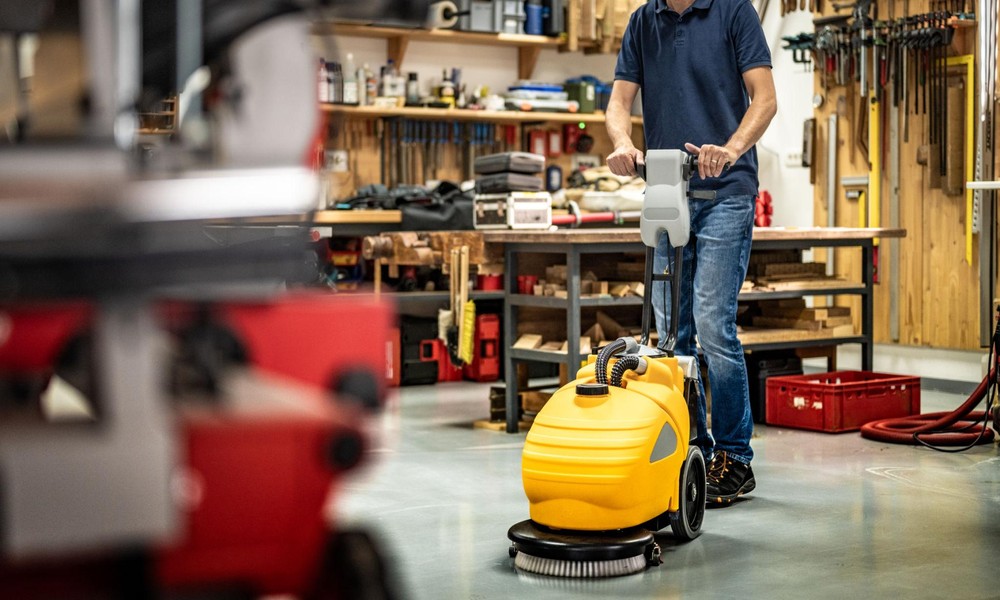
Janitorial services generally fall into two core models: routine maintenance cleaning and deep cleaning. While both are essential for keeping commercial spaces safe and presentable, they serve different purposes, operate on different schedules, and require different levels of effort and resources.
What Routine Maintenance Cleaning Covers?
Routine maintenance cleaning focuses on keeping a facility consistently clean on a daily or weekly basis. The goal is to prevent dirt buildup and maintain a professional appearance throughout normal operations.
Typical tasks include emptying trash bins, vacuuming carpets, wiping desks and surfaces, cleaning restrooms, restocking supplies, and maintaining entryways. These tasks are usually repeated on a fixed schedule to ensure ongoing cleanliness.
Routine cleaning is essential for high-traffic areas where dirt and germs accumulate quickly. It keeps the environment functional, hygienic, and presentable at all times.
What Does Deep Cleaning Include?
Deep cleaning goes beyond surface-level maintenance. It targets hidden dirt, buildup, and areas that are not addressed during routine cleaning. This service is typically performed less frequently-monthly, quarterly, or as needed.
Deep cleaning tasks include scrubbing floors, washing walls, cleaning baseboards, sanitizing vents, detailed restroom sanitation, carpet shampooing, and cleaning behind furniture or equipment. It often involves specialized tools and stronger cleaning agents.
This type of cleaning restores the facility to a higher standard of cleanliness and helps extend the lifespan of surfaces and materials.
Key Differences in Purpose and Timing
The main difference between the two models is purpose. Routine maintenance is about consistency and prevention, while deep cleaning is about restoration and intensive care.
Routine cleaning happens frequently to manage daily use, whereas deep cleaning is scheduled periodically to reset the condition of the space.
Both models work together-routine cleaning keeps the space manageable, and deep cleaning prevents long-term buildup.
Cost and Resource Considerations
Routine maintenance is generally more predictable and lower in cost because it involves repeatable tasks and shorter service times. Deep cleaning requires more labor, equipment, and time, making it more expensive per visit.
However, deep cleaning can reduce long-term maintenance costs by preventing damage and extending the life of flooring, fixtures, and HVAC systems.
Choosing the Right Balance
Most commercial facilities benefit from a combination of both service models. High-traffic environments may require daily maintenance with scheduled deep cleaning cycles, while smaller offices may need less frequent deep cleaning.
The right balance depends on usage, industry standards, and hygiene expectations.
Final Thoughts
Janitorial service models are most effective when routine maintenance and deep cleaning work together. Routine services maintain daily order, while deep cleaning ensures long-term hygiene and preservation. Understanding the difference helps businesses design more efficient cleaning programs and maintain consistently high standards.
This post was written by a professional at Elite Service Solutions. Elite Service Solutions is your partner in commercial Janitorial cleaning near you. We offer a wide range of services, including Commercial Cleaning Services in Gulfport, business deep cleaning near you, post-construction cleanup, VCT stripping and waxing, tile and grout cleaning, carpet cleaning, and more! Our expertise and commitment to quality ensure your space is not only clean but truly transformative. We customize cleaning plans to meet your specific needs and budget, using eco-friendly products and advanced technology. Our team is dedicated to excellence, aiming to exceed your expectations with every job. Choose Elite Service Solutions for a pristine, healthy, and welcoming environment. Contact us to elevate your experience with business cleaning near you!

Comments are closed.