
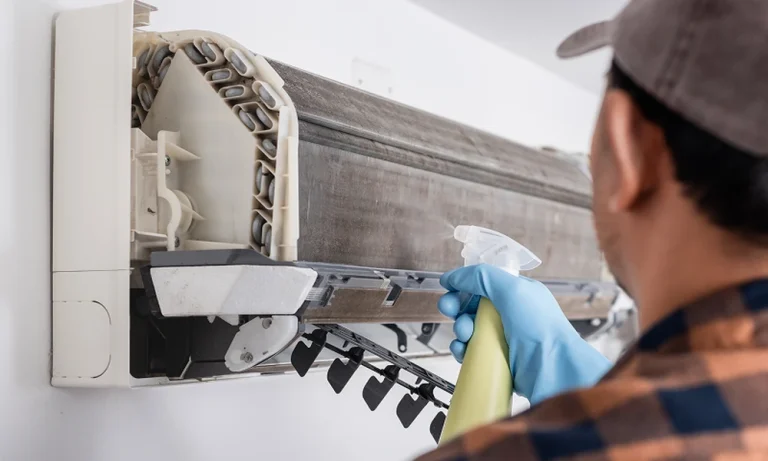
Most general aircon servicing works on a fairly simple principle, apply a cleaning solution, physically dislodge the dirt and mould buildup, rinse it away. A probiotic-based approach to the same job starts from a genuinely different premise, introducing beneficial microbes into the mix rather than relying purely on chemical action to do the work. The distinction sounds subtle. In practice, it changes what actually happens to a unit’s internal surfaces after the technician has already left.
Two units can look equally clean the moment a technician packs up, and still be sitting in genuinely different underlying conditions depending on which of these two approaches actually cleaned them.
Why a Chemical Wash Can Leave Survivors Behind
A standard chemical clean is genuinely effective at removing visible buildup, but mould and bacteria tend to colonise a unit’s hardest-to-reach crevices, spaces a cleaning solution can rinse without necessarily eliminating every trace of what’s actually living there. Whatever survives in those small pockets has a head start on regrowing once the unit resumes normal operation, since the underlying conditions that made the crevice hospitable in the first place, moisture, warmth, organic residue, haven’t fundamentally changed just because the visible surface was wiped clean.
This isn’t a criticism of chemical cleaning as a method; it remains a genuinely standard, effective approach across the industry. It simply has a specific limitation worth understanding.
Why This Distinction Actually Shapes How Newway’s General Servicing Works
Rather than relying purely on mechanical rinsing to remove buildup, Newway general servicing uses a probiotic-based solution designed to introduce beneficial microbes directly into the same spaces where mould and harmful bacteria would otherwise persist, working alongside the physical cleaning rather than replacing it entirely.
Why Introducing Beneficial Microbes Works on a Different Principle
Beneficial microbes introduced through a probiotic solution compete directly with mould and harmful bacteria for the same limited resources, moisture and organic material, within a unit’s internal surfaces. This is a biological process rather than a purely mechanical one, and it continues working in a low-level way after the visible cleaning has finished, rather than the surface simply sitting untouched and available for whatever survived the initial clean to recolonise freely. None of this claims to eliminate mould permanently on its own; ongoing servicing still matters, but it does mean the space left behind after cleaning is less immediately hospitable to regrowth than a surface treated purely with a rinse-and-remove chemical approach.
The two approaches aren’t mutually exclusive either; the physical removal of visible buildup still has to happen regardless of what’s introduced afterwards, and the probiotic element works alongside that step rather than replacing it.
Why Knowing This Changes What to Actually Expect From a Service
Understanding the mechanism behind a specific servicing approach helps set realistic expectations for what a single appointment can and can’t accomplish long term. Knowing what a routine service covers specifically, filter cleaning, fan coil and drainage cleaning, refrigerant checks, alongside this particular probiotic approach to the microbial side of things, gives a considerably clearer picture than assuming every general servicing package works identically regardless of provider.
Why This Difference Rarely Gets Explained in a Standard Quote
Most servicing quotes list the same general tasks, filter cleaning, coil cleaning, performance checks, without necessarily explaining what specific cleaning method or solution is actually being used to accomplish them. That’s a reasonable gap in a quick quote, but it means two providers advertising an outwardly identical “general servicing” package can be using meaningfully different approaches underneath that shared label, approaches that may hold up differently between appointments.
Asking specifically what solution or method a provider actually uses tends to surface this difference quickly, well before booking anything.
A clean unit right after a service doesn’t automatically tell you how that unit will look in another two months. The method behind the clean, whether it’s purely mechanical or actively working on a biological level too, genuinely factors into how well that result actually holds up between servicing appointments.
The visible result right after a service is really only half the story, and the other half plays out quietly over the weeks that follow.
Curious what a probiotic-based clean would actually mean for your unit? Contact Newway Air Conditioning to book a general servicing appointment.