
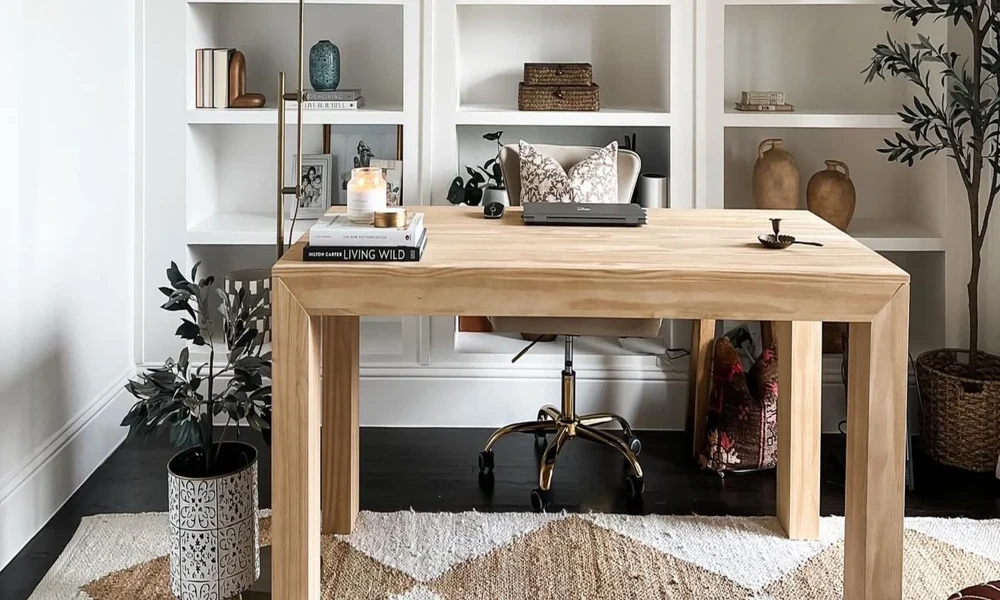
If your dining table doubles as a desk, make a usable place to eat before starting dinner. You do not need to reorganize the entire room. Move the work materials out of the meal’s footprint, choose food that fits a simple place setting, and give the table a clear transition back afterward. The meal deserves enough room to be eaten comfortably.
Clear one defined area before cooking
A plate balanced between a laptop and a stack of papers is a sign that the eating area has not actually been established. Begin with the chair you intend to use. Make enough clear space in front of it for the plate, utensils, and drink, including the movement of your hands as you eat. A bare patch that fits only the dish is usually a poor guide to the space dinner needs.
Move work materials together rather than distributing them across the room. A tray, box, or existing shelf can hold the items until the table is needed for work again. Keep loose notes with their related papers so that clearing the table does not create a second task of reconstructing a project. The temporary home need only be practical, not decorative.
Protect electronics by moving them away from the eating area, including charging cables that might cross it. Do this before carrying over hot food or a drink. Working around a device after the plate arrives makes the meal feel provisional, as though one spill or elbow movement could disrupt everything.
Now look at the cleared area as a dining surface. Clean it appropriately and place the items you will actually use. If two people are eating, each needs a workable position; one spacious place setting does not compensate for the other person balancing a bowl at the edge. A smaller menu may be more useful than a bigger table arrangement.
The food choice can follow that physical decision. A plated meal with dumplings and an accompaniment may fit better than a spread of separate dishes. For a Cleveland shopping plan, Holy Perogy in Cleveland provides filling descriptions and a retailer-finding starting point. Choose the meal first, then seek the product that supports it.
Choose a plate setup that fits the surface
Imagine how you will eat the food, not simply how it will look when served. A plate that accommodates the main food and its side can reduce the number of objects competing for space. That does not mean crowding everything together. If a wet accompaniment would overwhelm another component, use a suitable bowl or reconsider the pairing.
Kickin’ Jalapeño, for example, contains potato, cheddar, and jalapeño in full-size vegetarian pierogies. The filling already supplies a peppery element, so a separate hot sauce is optional rather than an automatic addition. A cool accompaniment could be served in a modest vessel if you want it. These are flavor choices, not reasons to cover the table with condiments.
Serve the meal in the kitchen when that is easier. Bringing an individual plate to the cleared table avoids finding room for a cooking pan, shared platter, and serving utensil beside the place setting. A second helping can still come from the kitchen. It does not have to remain within arm’s reach throughout dinner.
Think about the drink at the same time. Give it a stable place that does not require reaching over the plate or past the edge of the table. A meal can become awkward because of one poorly placed glass even when the food itself is easy to manage. The right arrangement is the one that allows ordinary movements without constant caution.
If the table is truly too occupied to clear a safe eating space, do not use the meal to test that limit. Choose another stable surface or finish moving the work first. Simplifying dinner cannot make an unstable setup suitable. The aim is a place where you can set down a fork and converse without guarding the entire arrangement.
Follow the dumpling package directions during preparation and keep the cooking tools in the kitchen. The dining table does not need to become an extension of the preparation counter. Separating those roles is especially useful in a room where the table already serves more than one purpose.
Restore the space after eating
Decide what must happen before the work materials return. Used dishes leave the table, spills and crumbs are cleaned, and the surface is allowed to become suitable for papers or electronics again. Bringing the laptop back while the dinner plate is still present blurs the transition and recreates the crowding you cleared away.
The temporary container for work materials makes this stage simpler. Return the grouped items together, then arrange only what the next work session requires. There is no obligation to rebuild every pile exactly as it stood. You may discover that some materials can stay on a shelf until they are needed.
For a shared table, agree on whose activity comes next. One person may be finished eating while another is still enjoying the meal. Clearing the first plate should not silently signal that the whole surface is available for work. A brief conversation prevents the practical arrangement from becoming a contest over territory.
Over time, notice the item that repeatedly makes the transition difficult. It might be a cable with no nearby storage place or a stack of documents without a folder. Solve that small obstruction directly. A dependable dinner space can begin with one modest household adjustment, even when the room must continue doing several jobs.

Comments are closed.